

$15,000,000 IN TAX PAYMENTS
300 CONSTRUCTION JOBS
MONETARY CONTRIBUTION TO COUNTY BROADBAND
ABOUT
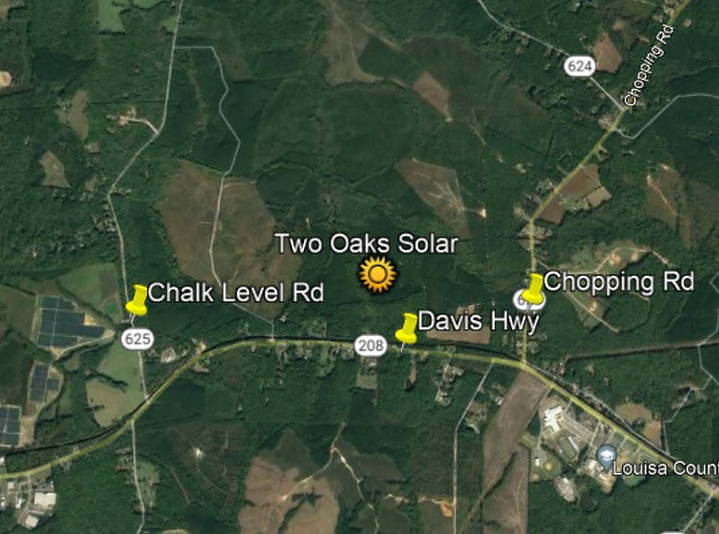
Two Oaks Solar is a responsible, environmentally-sound solar and storage project in Louisa County. The 118MW project will be located on approximately 1200 acres of industrial and agriculturally zoned land, with approximately 490 acres of important features including vegetative buffers, setbacks, pollinator plantings, and protected natural resources. It will deliver power to the grid via the transmission line between the Louisa Substation and North Anna.
Currently, Two Oaks Solar is in the development stages. We are securing the necessary legal and environmental permits to safely and responsibly develop the project. For more information, please call 571-312-5432 or contact us through the website.
118 MEGAWATTS (MW)
~24,000 HOMES POWERED
~490 ACRES OF PRESERVED HABITAT
~720 ACRES OF SOLAR FACILITIES AND NATIVE GRASSES
PROJECT TIMELINE

ECONOMIC IMPACT
Two Oaks Solar will provide several benefits to Louisa County, including ongoing increased revenue from taxes, well-paying construction jobs, contribution to local broadband deployment as well as native grass and pollinator plantings throughout the project.
-
Ongoing Revenue – The project is expected to generate approximately $15,000,000 in tax payments over the next three decades.
-
Jobs – The project will create approximately 300 well-paying construction jobs over the course of 9-12 months of construction.
-
Broadband Services – As part of our effort to give back to the community, we intend to contribute to the County’s effort to enhance the availability of broadband internet in the County.
-
Biodiversity – The proposed project will plant a pollinator garden on the property to create a habitat for bees and other critical species.
PROJECT OUTLINE
ENVIRONMENTAL IMPACT
Two Oaks Solar is a safe and environmentally-sound solar project that will preserve vital natural resources and protect the rural nature of Louisa County.
Two Oaks Solar will not only have a positive impact on the local environment and economy, but it will also generate no pollution, noise, or traffic outside of initial construction. It will place no strain on public infrastructure, including schools, roads, or water and sewer.
The project offers a unique opportunity to Louisa County to be able to preserve the land for future development needs while at the same time generating revenue and producing clean, affordable energy.
BUFFERS & SETBACKS
Buffers and setbacks designed to minimize the visual impact of the solar farm are an important component of the proposed project. Features include a substantial setback from property boundaries and public roads. Landscaping and screening will be provided along these roads and adjacent properties, where applicable. This will screen the project from view and maintain the existing character of the area.


VEGETATION
The design of the proposed project includes landscaping and buffers which will screen the project from view and further help maintain the existing character of the area. Our development process includes an evaluation of the existing vegetation, in conformance with the Louisa County land development code, and will pursue opportunities to establish ground cover with native species. In addition, pollinator mixes will be planted in parts of the project to increase biodiversity on site.
STATE PERMITTING
In order to comply with state requirements, Two Oaks Solar will obtain an environmental permit from the Virginia Department of Environmental Quality (DEQ). As part of the permit process, the impact on threatened and endangered species is evaluated and mitigation plans, if needed, are developed.

Contact
CULTURAL, HISTORIC & ARCHAEOLOGICAL RESOURCES
The initial site review indicates that one resource of cultural or historic significance was found within the project boundary. Two Oaks Solar will receive concurrence with these findings from the Virginia Department of Environmental Quality and will consult with the Department of Historic Resources to confirm the report's findings and provide proper conservation measures.
FAQ's
Is solar safe?
Unequivocally yes. Solar panels are designed and tested to withstand a range of environmental conditions. They are also designed to prevent any metals or resources from leaking into the ground or water.
Will the solar project cause glare?
The project has commissioned a Glint and Glare Study which identified no impacts to nearby residential properties or traffic with proposed buffers. The project also received a Determination of No Hazard to Air Navigation from the Federal Aviation Association.
Where will the project be located?
It will be located on a mix of Industrially and Agriculturally zoned property between Louisa, VA and Mineral, VA
What will happen to the project after its useful lifetime?
The project will be decommissioned by representatives of Two Oaks Solar. Valuable components will be resold and remaining equipment will be recycled. Two Oaks has proposed a decommissioning plan to the County and will post a security bond to ensure proper and timely project removal.
ABOUT THE DEVELOPER
Your Partner In Clean Energy
NCRE is excited about becoming a partner with Louisa County. NCRE is a leading solar developer in the Commonwealth. We leverage our community relationships and extensive industry experience to build sustainable, renewable energy projects that generate revenue for localities, deliver reliable electricity to customers, protect the environment, and provide financial security to our landowner partners.
NCRE is a subsidiary of Energix Renewables, an independent, long-term power producer that develops, constructs, owns, and operates renewable energy projects in the US.